Tangible Interfaces and Learning: A More Active Approach to Training
“Digital tools are everywhere in training, yet engagement, retention and on-the-job transfer often remain low. The issue is not only the content; it is also the interface. Tangible interfaces bring digital learning into the physical world so people can learn by doing.
Tangible interfaces and learning: a new approach to training
Digital technology is everywhere in training. Yet results are often disappointing: learners lose interest, retain little and struggle to apply what they have learned at work.
The problem is not only the content. It is also the interface.
For decades, digital training has relied on a familiar model: screen, mouse and slides. It works well for distributing information, but much less well for helping people learn deeply. What if we changed the model?
Why current interfaces can limit learning
Traditional interfaces such as screens, learning platforms and e-learning create a divide between the real world, where people act, and the digital world, where they observe.
Learning is not passive. Cognitive science shows that people learn more effectively when they are physically engaged, handling objects and interacting with others. Our intelligence is embodied: it works through action, not only through information displayed on a screen.
That is exactly what conventional interfaces make difficult.
Tangible interfaces: learning through handling
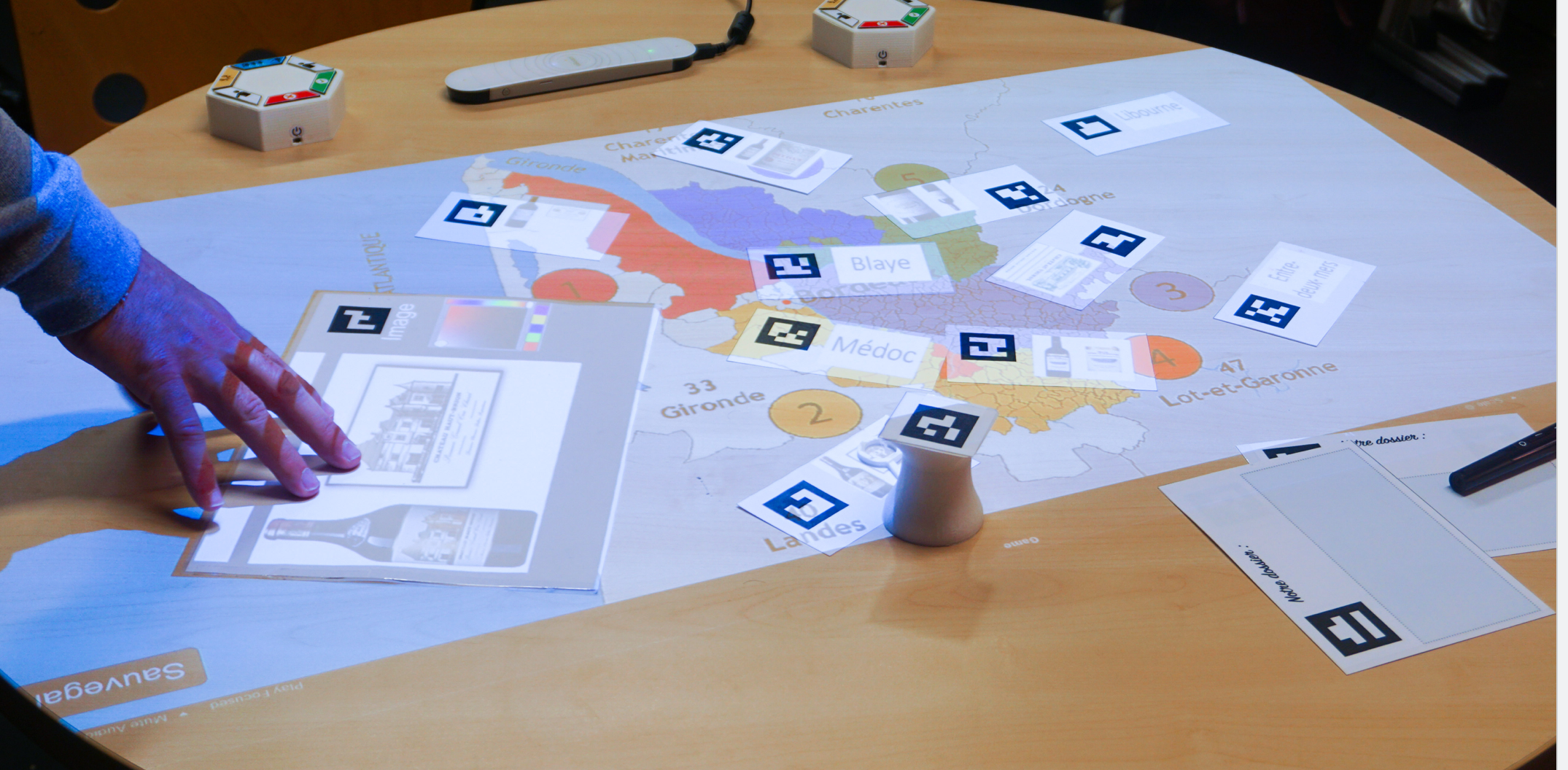
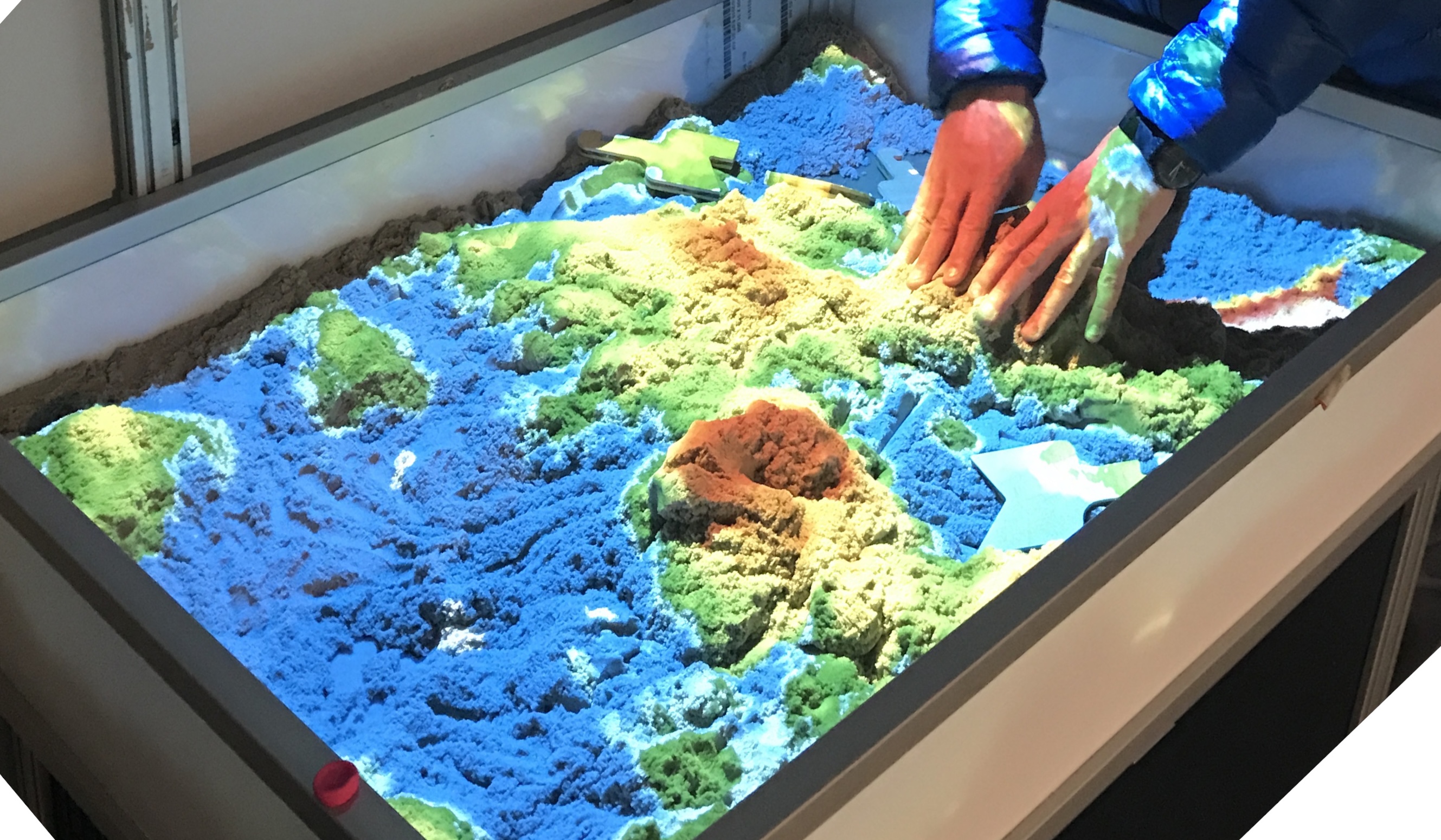
Tangible interfaces offer a different approach. Instead of interacting only with a screen, learners handle physical objects that control digital information.
- Less clicking.
- More handling.
- More experimentation.
Digital information moves beyond the screen and into the workspace. This can support stronger engagement, clearer understanding, active learning and more natural collaboration.
The turning point: bringing digital information into the real world
For years, technology asked people to adapt to digital interfaces. Tangible interfaces turn that around: they adapt digital tools to the way people work and learn.
Instead of projecting our thinking onto a screen, we project digital information into the physical world. Learning becomes concrete, visible and something people can manipulate together.
Augmented reality and tangible interaction
Spatial augmented reality, computer vision and AI are making these approaches accessible at a larger scale. Teams can now see information projected onto a table or workstation, follow interactions in real time and take part in collaborative experiences without wearing a headset.
These are physical-digital environments: spaces where teams learn by doing, together.
Use cases in training, safety and industry
Tangible interfaces are especially useful when learning by doing matters, including:
- Safety training and risk prevention.
- Industrial training and job-specific skills.
- Collaborative workshops and collective problem-solving.
- Soft-skills training.
In these settings, teams can become more engaged, remember more, adopt new practices sooner and transfer learning to the workplace more directly.
Co-Idea makes learning tangible
At Co-Idea, we develop interactive environments that bring digital information into the physical world. They combine an augmented work surface, objects people can handle and a collaborative experience in real time.
The goal is to turn training into active experience:
- Fewer slides.
- More action.
- More impact.
Conclusion: the future of training goes beyond the screen
Tangible interfaces are not a gimmick. They address a fundamental mismatch between digital tools and the way people learn. The future of training will not be digital alone; it will combine physical and digital experiences.
And above all, it will be tangible.